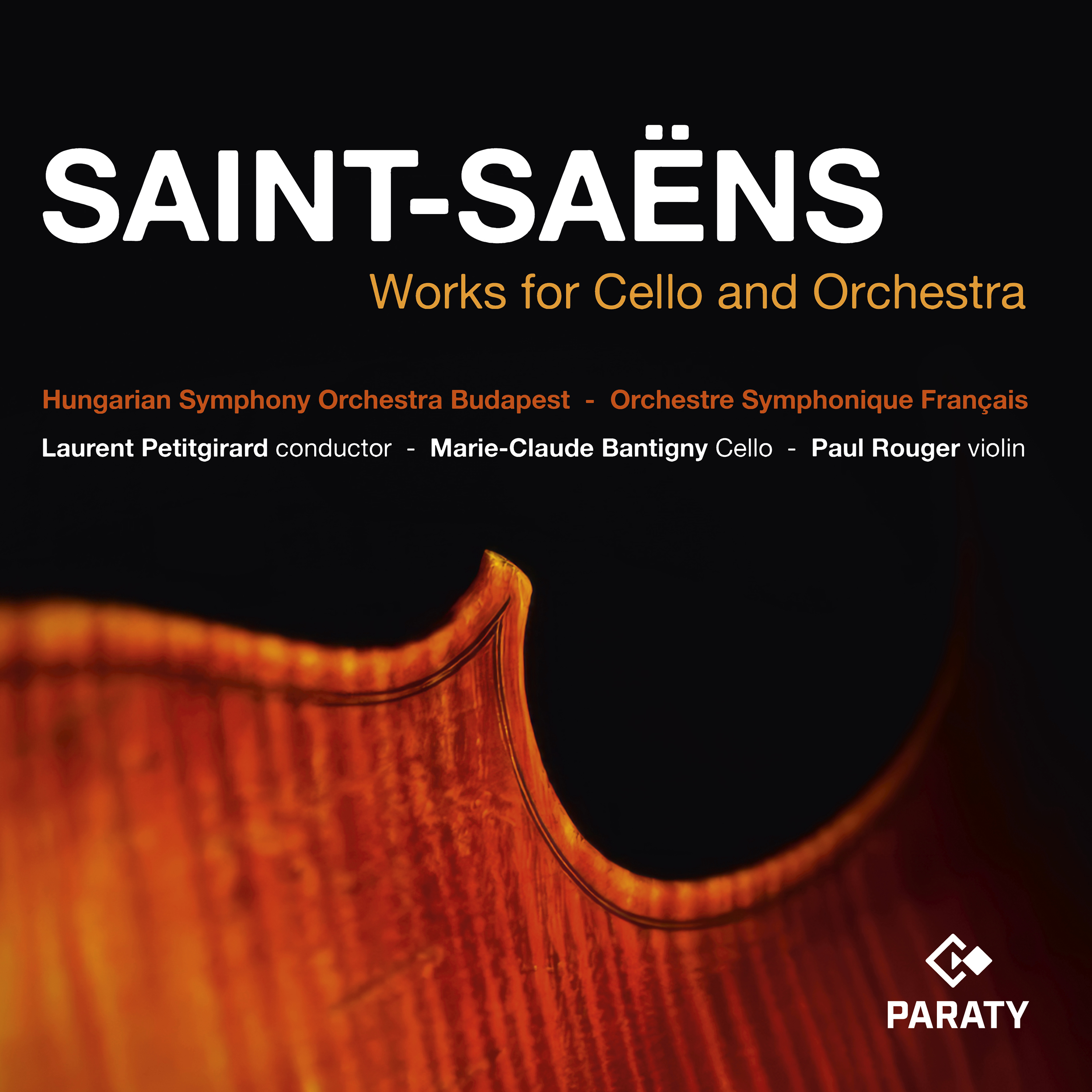
Saint‑Saëns: Works for Cello and Orchestra

Saint‑Saëns: Works for Cello and Orchestra
Camille Saint-Saëns Composed Two cello concertos, to Thirty years apart, and a symphonic poem, The Muse and the Poet, which combines the cello in a close dialogue with the orchestra. This album brings together these Three works, performed by Marie-Claude Bantigny under the direction of Laurent Petitgirard, with two different orchestras, recorded on a long period.
The Concerto No. 1 in A minor, written in 1872 For the cellist Auguste Tolbecque, was recorded in 1996 With theFrench Symphony Orchestra. The Concerto No. 2 in D minor, dated 1902, which is more rarely present in the discography than the first one, was captured at Budapest in 2022 With the Hungarian Symphony Orchestra. At the end of the program, The Muse and the Poet, composed of 1910 and interpreted here by Marie-Claude Bantigny on the cello, Paul Rouger On the violin and a Small orchestra, highlights the intimate relationship between the poet and his muse, embodying the quest for beauty and emotion through music.
The three works collected in this recording cover nearly forty years of creation chez Saint-Saëns. They bear witness to a The composer's constant fidelity to the cello, whom he considered throughout his career as a preferred partner of the orchestra.
Les recordings, made at more than thirty years apart, reveal a continuity of interpretation : The close relationship between soloist and conductor Wear a shared vision Music by Saint-Saëns. This Musical agreement, going beyond orchestral eras and formations, gives the ensemble a unity of style and breath.

Saint‑Saëns: Works for Cello and Orchestra
Camille Saint-Saëns Composed Two cello concertos, to Thirty years apart, and a symphonic poem, The Muse and the Poet, which combines the cello in a close dialogue with the orchestra. This album brings together these Three works, performed by Marie-Claude Bantigny under the direction of Laurent Petitgirard, with two different orchestras, recorded on a long period.
The Concerto No. 1 in A minor, written in 1872 For the cellist Auguste Tolbecque, was recorded in 1996 With theFrench Symphony Orchestra. The Concerto No. 2 in D minor, dated 1902, which is more rarely present in the discography than the first one, was captured at Budapest in 2022 With the Hungarian Symphony Orchestra. At the end of the program, The Muse and the Poet, composed of 1910 and interpreted here by Marie-Claude Bantigny on the cello, Paul Rouger On the violin and a Small orchestra, highlights the intimate relationship between the poet and his muse, embodying the quest for beauty and emotion through music.
The three works collected in this recording cover nearly forty years of creation chez Saint-Saëns. They bear witness to a The composer's constant fidelity to the cello, whom he considered throughout his career as a preferred partner of the orchestra.
Les recordings, made at more than thirty years apart, reveal a continuity of interpretation : The close relationship between soloist and conductor Wear a shared vision Music by Saint-Saëns. This Musical agreement, going beyond orchestral eras and formations, gives the ensemble a unity of style and breath.
%20(1)%20(1)%20(1)%20(1)%20(1)%20(1)%20(1)%20(1)%20(1)%20(1)%20(1)%20(1)%20(1)%20(1)%20(1)%20(1)%20(1)%201.png)
Brahms: Four Sonatas for Cello & Piano
%20(1)%20(1)%20(1)%20(1)%20(1)%20(1)%20(1)%20(1)%20(1)%20(1)%20(1)%20(1)%20(1)%20(1)%20(1)%20(1)%20(1)%201.png)
Brahms: Four Sonatas for Cello & Piano
Bringing together for the first time the Four Sonatas for Cello and Piano by Johannes Brahmsis embracing a whole life journey: from spirited youth to peaceful maturity, from memory to light.
This integral reveals a quest for unity, an intimate dialogue between the lyricism of the strings and the architectural thought of the piano — between The human and the spiritual.
By choosing to also play the Violin sonatas transcribed on cello, Marie-Claude Bantigny and Karolos Zouganelis offer another light to this music: more crepuscular, more interior, where each note seems whispered at the border of singing.
Their interpretation explores this Brahmsian tension between rigor and emotion, between nostalgia and tenderness, like a breath suspended between memory and hope.
Recorded at the auditorium of Prayssas, this album celebrates Brahms's profound humanity : a composer who, in solitude, abolishes the boundaries of time to invite us to meditate, in a space where music becomes prayer.
%20(1)%20(1)%20(1)%20(1)%20(1)%20(1)%20(1)%20(1)%20(1)%20(1)%20(1)%20(1)%20(1)%20(1)%20(1)%20(1)%20(1)%201.png)
Brahms: Four Sonatas for Cello & Piano
Bringing together for the first time the Four Sonatas for Cello and Piano by Johannes Brahmsis embracing a whole life journey: from spirited youth to peaceful maturity, from memory to light.
This integral reveals a quest for unity, an intimate dialogue between the lyricism of the strings and the architectural thought of the piano — between The human and the spiritual.
By choosing to also play the Violin sonatas transcribed on cello, Marie-Claude Bantigny and Karolos Zouganelis offer another light to this music: more crepuscular, more interior, where each note seems whispered at the border of singing.
Their interpretation explores this Brahmsian tension between rigor and emotion, between nostalgia and tenderness, like a breath suspended between memory and hope.
Recorded at the auditorium of Prayssas, this album celebrates Brahms's profound humanity : a composer who, in solitude, abolishes the boundaries of time to invite us to meditate, in a space where music becomes prayer.
.png)
Beethoven: Complete Sonatas for Cello & Piano
.png)
Beethoven: Complete Sonatas for Cello & Piano
Les Sonatas for cello and piano of Beethoven span his entire creative life — from the young virtuoso from Bonn to the visionary composer of maturity.
Composed between 1796 and 1815, they bear witness to a meteoric evolution: from the brilliant virtuosity of the first sonatas dedicated to the Prussian king Frederick William II, to the formal and spiritual freedom of the works of the final period.
With Romano Pallottini, Marie-Claude Bantigny Explore these pages like a real Journal of the soul, where tenderness, struggle and light intersect.
The Sonata in A Major op. 69, contemporary of Symphonies No. 4 and 5, deploys an intimate and heroic eloquence, while the two sonatas of opus 102 pave the way for romanticism, combining fervour and simplicity.
Recorded during a concert at the Salle Colonne in Paris, these interpretations celebrate the complicity of dialogue between cello and piano: two voices united in the same breath — that of a free and deeply human Beethoven.
.png)
Beethoven: Complete Sonatas for Cello & Piano
Les Sonatas for cello and piano of Beethoven span his entire creative life — from the young virtuoso from Bonn to the visionary composer of maturity.
Composed between 1796 and 1815, they bear witness to a meteoric evolution: from the brilliant virtuosity of the first sonatas dedicated to the Prussian king Frederick William II, to the formal and spiritual freedom of the works of the final period.
With Romano Pallottini, Marie-Claude Bantigny Explore these pages like a real Journal of the soul, where tenderness, struggle and light intersect.
The Sonata in A Major op. 69, contemporary of Symphonies No. 4 and 5, deploys an intimate and heroic eloquence, while the two sonatas of opus 102 pave the way for romanticism, combining fervour and simplicity.
Recorded during a concert at the Salle Colonne in Paris, these interpretations celebrate the complicity of dialogue between cello and piano: two voices united in the same breath — that of a free and deeply human Beethoven.

I Am Another

I Am Another
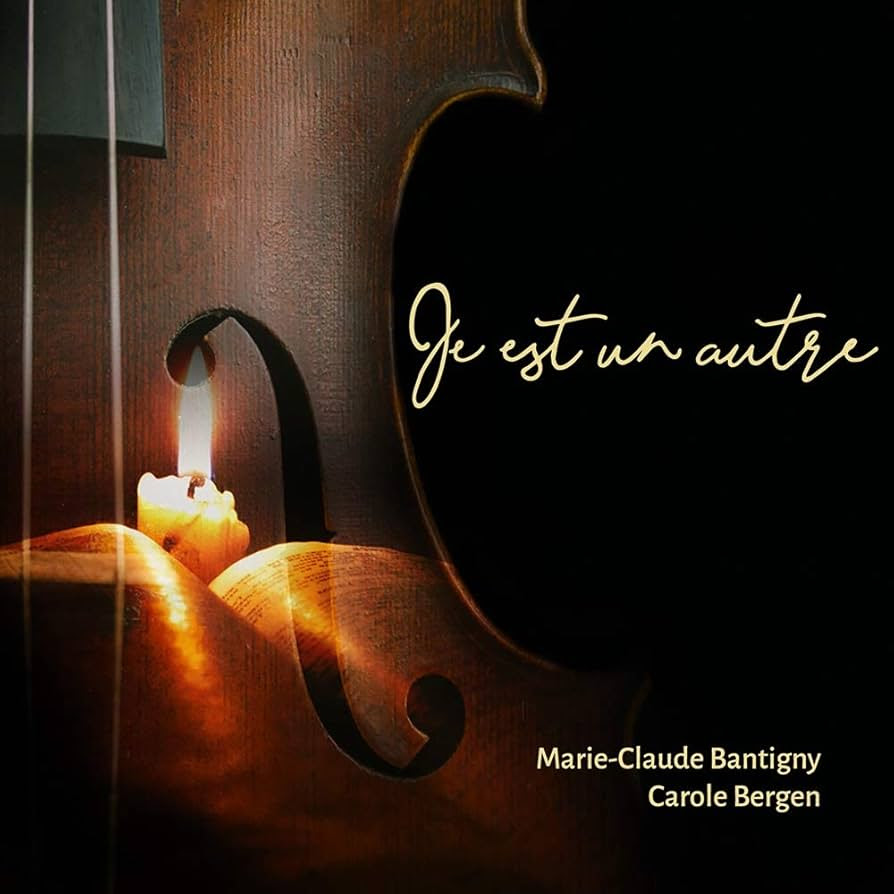
“I AM SOMEONE ELSE”, it is with this famous phrase by Arthur Rimbaud that the cellist Marie-Claude Bantigny Chose to name his very first album. An invitation to a suspended journey, where time is only an illusion, where past works blend seamlessly with contemporary repertoire, where the intersection of texts and music unifies the arts and pacifies time.
From this sentence, taken from a letter from Rimbaud, the cellist recalls that the creative act is issued by something greater than oneself. It is therefore with her sensitivity as a musician and in all humility that the idea of an album was born, bringing together works and texts that illustrate the illustrate Mystery, The Unknown And the Greatness Of life.
For this record project, where works for solo cello dialogue with author texts, Marie-Claude Bantigny has chosen to partner with the narrator Carole Bergen

I Am Another
“I AM SOMEONE ELSE”, it is with this famous phrase by Arthur Rimbaud that the cellist Marie-Claude Bantigny Chose to name his very first album. An invitation to a suspended journey, where time is only an illusion, where past works blend seamlessly with contemporary repertoire, where the intersection of texts and music unifies the arts and pacifies time.
From this sentence, taken from a letter from Rimbaud, the cellist recalls that the creative act is issued by something greater than oneself. It is therefore with her sensitivity as a musician and in all humility that the idea of an album was born, bringing together works and texts that illustrate the illustrate Mystery, The Unknown And the Greatness Of life.
For this record project, where works for solo cello dialogue with author texts, Marie-Claude Bantigny has chosen to partner with the narrator Carole Bergen
.png)
Franz Schubert & Francois Villon
.png)
Franz Schubert & Francois Villon
Reunite Villon and Schubert, is to bring time closer together, to unite the human condition in its most tragic and most vibrant aspects. It's building the fine barrier between life and death, holding up a mirror in which our masks hide, revealing what we are in the making.
Villon's musicianship, in his rhymes and his repeated verse — “In this faith I want to live and die” — resonates with Schubert's voice. The ballad, resulting from dance and song, finds its echo here: the chorus becomes complaint, the complaint becomes song. In the Sonata “Arpeggione”, melancholy whispers, tenderness arises, the innermost fears are confided in — tears come up, but the smile wins.
Bringing these two worlds together means extracting each work from its context in order to perceive its universality. In his solitude, Villon weaves a link between the past (the mother), the present (the fault), and the future (death). Schubert, for his part, writes music freed from time, carried towards infinity. For both of them, death is not fear, but appeasement: an ash born from the embers, a consolation.
This dialogue between poetry and music reveals this A mixture of lucidity and tenderness, of despair and beauty, of self-forgetfulness. This same inner child, serious and luminous, seems to still live — with Villon as well as with Schubert.
.png)
Franz Schubert & Francois Villon
Reunite Villon and Schubert, is to bring time closer together, to unite the human condition in its most tragic and most vibrant aspects. It's building the fine barrier between life and death, holding up a mirror in which our masks hide, revealing what we are in the making.
Villon's musicianship, in his rhymes and his repeated verse — “In this faith I want to live and die” — resonates with Schubert's voice. The ballad, resulting from dance and song, finds its echo here: the chorus becomes complaint, the complaint becomes song. In the Sonata “Arpeggione”, melancholy whispers, tenderness arises, the innermost fears are confided in — tears come up, but the smile wins.
Bringing these two worlds together means extracting each work from its context in order to perceive its universality. In his solitude, Villon weaves a link between the past (the mother), the present (the fault), and the future (death). Schubert, for his part, writes music freed from time, carried towards infinity. For both of them, death is not fear, but appeasement: an ash born from the embers, a consolation.
This dialogue between poetry and music reveals this A mixture of lucidity and tenderness, of despair and beauty, of self-forgetfulness. This same inner child, serious and luminous, seems to still live — with Villon as well as with Schubert.